Showing posts with label AFL-CIO. Show all posts

Sunday, March 8, 2020

AAPI workers need protection vs. COVID-19 and xenophobia, says organized labor


In light of the outbreak of the coronavirus, cases emerging in the US, American workers are speaking up on how xenophobia and racism interact with America’s inadequate healthcare system and outdated labor laws to endanger workers and hinder disease prevention. 

Over 2 million AAPIs work in healthcare, transportation and service industries -- these workers are facing xenophobic and racial discrimination in the workplace in addition to increased exposure to communicable diseases, according to the Asian Pacific American Labor Alliance, AFL-CIO (APALA). 

APALA is asking employers in various fields where AAPI workers are common to put in place procedures to protect their employees.

Without federal policies guaranteeing paid sick leave and adequate health insurance coverage for all workers, many working people are effectively prevented from following the CDC’s guidance to stay home when they are sick, said APALA in a press statement.

 “As flight attendants, we are well trained with regard to health and safety protocols because we have been on the frontlines of deadly viruses such as SARS, Ebola, swine flu (H1N1) and avian flu (H5N1)," states APALA National executive board member and Association of Flight Attendants - CWA Local 29011 member Stan Kiino. "We face higher risks of exposure to illnesses through travelers’ coughing and sneezing in enclosed spaces. 

"As we escalate precautions to prevent the spread of COVID-19, we must prioritize protecting workers by informing them with facts, providing protective gear, and creating contingency plans as our workplaces are closed or scaled back; cancelled flights impact our ability to pay bills,” says Kiino.

Filiipino nurses throughout the US hospital system are being tasked to care for people who may or may not have contact with people infected with the coronavirus. 

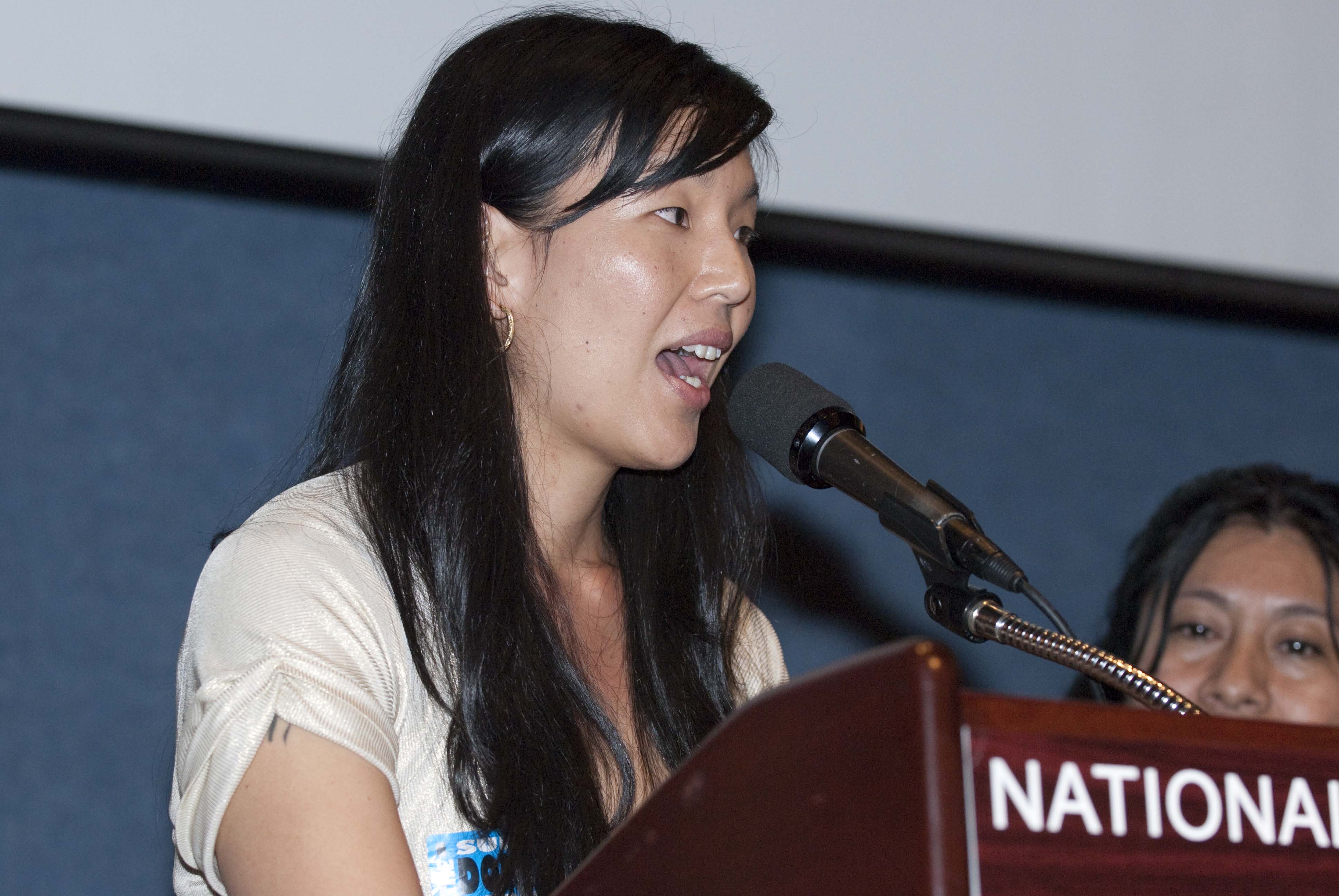
“Healthcare workers are the ones who care for us when we are sick, but as workers on the frontlines they face an increased exposure to illness," says APALA National Executive Board Member Ligaya Domingo and SEIU 1199NW Education Director. 

"That is why we need to ensure that hospitals and healthcare facilities have sufficient staffing levels, well informed workers, personal protective equipment for all workers, and screening protocols that are based on likely exposure to the virus, not anyone’s language, skin color, or country of origin. COVID-19 is preventable and treatable, but only if we ensure working people are informed and protected.”

APALA National Executive Board and UTLA/ AFT/NEA member Arlene Inouye states: 
“As a proud product of California’s public education system and as Secretary for UTLA, the second largest teachers’ local in the country, I know very well how educators are often left to figure out how to support sick students who come to school because their parents are not able to take a day off work. During times of heightened xenophobia and racialized discrimination, we are also left responsible for protecting all students and creating safe environments for them to learn and thrive. Right now, with widespread misinformation related to COVID-19, we are ready to protect our Asian American students, who already face some of the highest rates of bullying in this nation.”
Employers must include a protocol against racial discrimination in their responses to COVID-19. APALA issues the following guidance to protect Asian American and Pacific Islander (AAPI) workers:


Sunday, November 10, 2019

Sunday Read: Unions eye Asian American, Native Hawaiian & Pacific Islander workers, a growing force

APALA

Organized labor needs to invest more outreach and education to the Asian American, Native Hawaiian and Pacific Islander communities, a rapidly growing and increasingly powerful segment of the US labor force, according to a recently released report.

The report, "Untapped Power: The Strength of Asian American, Native American & Pacific Islander Working People" was released by the Asian American Pacific Labor Alliance of the AFL-CIO earlier this month.

“In our work and for this report we centered low-wage workers because they are the most vulnerable to the power dynamics between employer and employee," said Executive Director Alvina Yeh. In an economy that is rigged against workers, we have to shift the burden away from workers and power away from bosses. All workers stand to gain from shifting these power dynamics."

Asian American, Native Hawaiian, and Pacific Islander (AANHPI) workers are the fastest growing working age population in the United States, overrepresented at the lower and higher ends of the labor market - meaning that our communities experience wide income disparity. And yet AANHPI working people are often overlooked and under organized. 

Among the findings of the report is that the AANHPI population is the fastest-growing population in the  US.  In 2017, the combined AANHPI population comprised of 18,793,997 (AAPI alone) or 22,604,911 (AAPI alone or in combination with other races) people. This is roughly 6% or 7% of the US population respectively. Paired with this increase is a major rise in the AANHPI working population, which has grown nearly ten times faster than their white counterparts. 


In 2017, the labor force participation rate of Asian Americans was 63.6%. The NHPI labor force participation rate of 67% was the highest among all racial groups, including people of two or more races (66.9%) and Hispanics (66.1%). 


Among AANHPIs participating in the labor force, Indians made up the largest group (23% of all Asians), followed by Chinese (22%), Filipino (16%), Vietnamese (11%), Koreans (8%), and Japanese (5%).

As our immigrant and working class communities are under attack, it is increasingly important that the labor movement, community-based organizations, and policymakers take into the unique challenges and needs that AANHPIs face as well as recognize the common issues and experiences that this community shares with all workers.

The report emphasizes the urgency with which the labor movement and policymakers must continue to organize and protect AANHPI communities in order to secure safe, healthy, and prosperous livelihoods for all working people and to harness their political potential to drive progressive change. In short, the labor movement stands to grow stronger from organizing AANHPI workers, and AANHPI communities stand to benefit from uniting together and joining the labor movement.

The report takes a look at who AANHPI workers are, what barriers we face, and how advocates, policymakers, and the labor movement can fight for AANHPI communities and all workers. 


"AANHPIs are the fastest growing working age population and a recent poll shows that our community supports a vision for a progressive economy," says Yeh. "Tapping into the strength of Asian American, Native Hawaiian, and Pacific Islander working people is integral to the future of work and the labor movement.” 

The Executive Summary follows:

UNTAPPED POWER

As unions and the labor movement come under attack, it becomes increasingly important to organize Asian Americans, Native Hawaiians, and Pacific Islanders — the fastest-growing population in the United States.

There are more than 21 million AANHPIs, comprising roughly 5% of the population.

Accompanying this rapid population growth is the rise of AANHPI working people. AANHPI working people span a wide range of incomes and occupations, from office and administrative support, to nail salon and personal care occupations, to food and restaurant workers. 


In 2017, AANHPIs had a poverty rate of 11.1%. Native Hawaiians and Pacific Islanders had the highest poverty rates at 16.1% and 18.3% respectively.


Notably, roughly
 3 in 4 (72%) Asian American low-wage workers are immigrants; this is significant as Asian Americans account for over one-quarter (27.1%) of the immigrant population in the U.S.


While the number of AANHPI working people increases, the union membership rate among Asian Americans is on the decline, even though the union benefit is clear. Thanks to unions, AANHPI union members enjoy higher wages, better benefits, safer workplaces, and a voice on the job.

AANHPI workers face many challenges when it comes to organizing — some of which are similar to the challenges of organizing across all workers, and some of which are unique to AANHPI and other communities of color. Exclusionary provisions were built into our federal labor laws that leave workers of color vulnerable to exploitation. The Trump administration has further endangered these workers with anti-immigrant policies and xenophobic rhetoric that make it even less likely for workers to seek recourse for illegal or inhumane treatment. The current political climate has fueled large tax cuts for the wealthy, stacked anti-worker activists in our cabinet and courts, and multiplied anti-worker and anti-immigrant policies and practices. 

AANHPI workers, especially immigrants and women, are vulnerable to employer abuse due to systemic racism, xenophobia, and sexism, and devaluation of their labor. The community’s lack of familiarity with the labor movement and the rise of aggressive anti-union campaigns only marginalize these workers more. While these obstacles create a difficult climate to organize AANHPI workers, there are many ripe opportunities for unions,
organizers, and policymakers:

Policies for stronger worker rights: Occupations such as food preparation and serving and sales have 
high concentrations of AANHPI workers but have some of the lowest unionization rates. Some of these jobs leave working people even more vulnerable due to policies that exclude them from basic but critical labor standards, such as the rights to form a union, earn a minimum wage, and receive overtime pay. Policymakers must strengthen standards for workers that have been historically excluded from federal labor laws by:
• expanding coverage under the National Labor Relations Act, the Fair Labor Standards Act, and other federal labor laws to all workers regardless of industry, size of employer, and worker classification type; 
• shifting the burden and risk of enforcing labor standards from workers to employers; 
• ensuring working people are guaranteed a living wage and good benefits in order to build thriving communities; and, 
• restoring fairness to an economy rigged against workers through stronger employee organizing rights.
Research and tap into AANHPIs’ political power: 

Over 80% of Asian Americans believe that workers should have access to livable wages, affordable and comprehensive healthcare, more education and job training, safe working conditions, and dignity and financial stability in retirement. Unfortunately, Asian American voters receive sparse contact from political parties and traditional institutions when it comes to voting. 


This lack of outreach shows up as AANHPIs are not very familiar with the role of unions, and only 40% of Asian American voters have a favorable impression of unions. In order to harness the political power of AANHPIs, the labor movement must:
• advance union education and outreach to AANHPI communities; 
• collect disaggregated data on AANHPI union members; and, 
• center AANHPIs in civic engagement programs and rapidly increase outreach.
 Organize young, immigrant, women, and LGBTQ workers: Asian American and NHPI working age populations generally skew younger than the white working age population. The challenges that Millennials and Generation Z workers face are unique and growing: they are confronting the decline of the middle class, the rise of the precarious gig economy, contract work that leave workers unable to make ends meet, and worsening labor conditions. To harness the power of young workers, the labor movement must:
• expand and invest in programs that promote intergenerational organizing and mobilize and train young workers; and 
• support schools where young workers are already organizing, especially graduate students and adjunct faculty through policy and training programs. 17.4 percent of the American workforce, or 28.2 million people, are foreign-born — Asian Americans account for nearly one-quarter of this population. 
In other words, AANHPIs are a vital part of the global migrant workforce. In addition to inadequate access to educational attainment, language barriers, discrimination, and limited English proficiency, immigrant workers are under attack by federal anti-immigrant policies. To empower immigrant workers, policymakers and the labor movement must:
• support pro-immigrant policies and legislation that create pathways to citizenship; 
• work towards language justice and provide culturally competent resources on worker and immigrant rights; 
• ensure that union halls and union employer workplaces are safe spaces; and, 
• hold corporations accountable for their labor violations both in the U.S. and abroad.
As a whole, AANHPI women have a 66.7% participation rate in the labor force, second only to Hispanic women.4 With respect to unionization rates, AANHPI women have a higher rate (11%) compared to AANHPI men (8%).5 While unionization rates for AANHPI women are higher than that of AANHPI men, women workers may face challenges to organizing together. To support women workers, we must:
• support union caucus and affinity spaces for women union leaders; 
• rectify policies and practices that prevent women workers from organizing; and, 
• work toward ending discrimination and gender-based violence in the workplace.
Nearly 5 percent of Asian adults in the United States identify as LGBTQ.

More than half of LGBTQ people live 
in a state that does not have laws protecting them from discrimination, including the workplace.

These workers receive some of the lowest pay among all workers. To lift up LGBTQ AANHPIs, the labor movement must:

• support policies and legislation that are inclusive of LGBTQ workers and protects against harassment and discrimination; 
• support union caucus and affinity spaces for LGBTQ union leaders; and 
• Address the lack of comprehensive, timely, and detailed data on LGBTQ workers of color, including AANHPI workers.

Members of the Culinary Workers demonstrate for better benefits and working conditions in Las Vegas.

Organize Cross-Racial Coalitions: As unions organize AANHPIs, they must reckon with the labor movement’s past alienation of Asian immigrant workers. It is incumbent upon unions to avoid perpetuating nativist and anti-immigrant agendas, to work on ending white supremacy, disrupt model minority practices that pit Asian Americans against other communities of color and organize with a racial justice lens in mind. The labor movement must:
• build cross-racial and cross-issue coalitions; 
• invest in trainings, programs, and campaigns that strengthen racial equity; and, 
• collaborate and tap into the expertise of AFL-CIO constituency groups.
Strengthen worker center organizing and expand into more industries: Income inequality and the gig economy are rapidly changing the face of work today. Declining union membership rates mean that unions must be flexible and responsive to the needs of workers. Worker centers and community organizations have long held a place in the labor movement as spaces where workers can receive training, English classes, and information about their rights. At the same time, several industries are ripe for union organizing, such as the tech industry, ridesharing services, and nail salon workers. The labor movement must:
• increase investment in organizing non-union workers in industries with higher concentrations of AANHPIs workers; 
• strengthen and invest in partnerships with worker centers, and 
• stop independent contractor misclassification and restore accountability for labor standards in outsourced work, including temp work and gig economy jobs.
Unleashing AANHPI power for worker justice and tapping into the progressive political power of the AANHPI community is crucial to the future of workers and the labor movement. Without AANHPIs the labor movement cannot survive, and AANHPIs need the labor movement now more than ever. This is our future. This is the state of AANHPI working people.

READ the entire report here.
____________________________________________________________________________________


Monday, September 2, 2019

LABOR DAY: 7 AAPI labor leaders you should know

Originally posted by the AFL-CIO in May of 2019 to cocmmemorate Asian Pacific American Heritage Month, we are reposting today in celebration of Labor Day.  - Editor

By Kenneth Quinnell
A blog from the AFL-CIO


Each May is Asian Pacific American Heritage Month, when we celebrate the accomplishments, culture and history of Asian Americans and Pacific Islanders in the United States. 


Today, we are going to take a deeper look at members of the Asian American and Pacific Islander community who have advanced the cause of worker justice. Here are seven labor activists who you should know about for Asian Pacific American Heritage Month:


Ai-jen Poo
Wikimedia Commons
Ai-jen Poo: Ai-jen Poo started organizing domestic workers in 1996 and helped found Domestic Workers United. In 2010, DWU was key in the passage of New York's Domestic Workers Bill of Rights, the first law in the country to guarantee domestic workers labor protections. The next year, DWU helped organize the first national meeting of domestic worker organizations, leading to the formation of the National Domestic Workers Alliance. She has been NDWA's director since 2010. Her other efforts on behalf of working people include Caring Across Generations, which campaigns for affordable health care for our aging population and for access to quality jobs for the caregiver workforce.


Larry Itliong: Born in the Philippines, Larry Itliong was a farm worker in California. In 1956, he founded the Filipino Farm Labor Union and later organized a group of Filipinos to strike against grape growers in Delano. For eight days they were harassed and faced violence and saw no progress. Itliong approached César Chávez and the two groups joined together to launch the Delano Grape Strike of 1965 that eventually led to the creation of the United Farm Workers (UFW). Chávez became director and Itliong assistant director. He continued to organize with the UFW and the Filipino American Political Alliance until his passing in 1977.


Maf Misbah Uddin: In 1988, Maf Misbah Uddin began work as an actuary in New York City. He became active in the Accountants, Statisticians and Actuaries Local 1407, becoming president in 2000. He also became treasurer of AFSCME District Council 37. As treasurer, he improved the transparency of the union's finances. His work was vital in keeping DC 37 on budget in the devastating aftermath of Superstorm Sandy in 2012, which did extensive damage to the union's headquarters. He is also founder and president of the Alliance of South Asian American Labor.


May Chen
Voices of Labor
May Chen: Before moving to New York in 1979, May Chen taught high school and college courses in California and founded a day care center. In New York, she did some work for UNITE HERE Local 6 of the Hotel, Restaurant, Club Employees and Bartenders Union. Inspired by the 1982 garment workers' strike in Chinatown, she joined the International Ladies' Garment Workers Union (ILGWU). There she worked on the Immigration Project, the first union-created legal advocacy department for immigrant workers. She later worked in ILGWU's education department and served the New York City Central Labor Council, the Coalition of Labor Union Women and the Asian Pacific American Labor Alliance, ILGWU Local 23-25, the New York Metropolitan Area Joint Board. Before retiring in 2009, she served as international vice president of UNITE HERE.


Philip Vera Cruz: Born in the Philippines, Philip Vera Cruz worked on farms before moving to the United States. In 1943, he moved to California and became a farm worker. After joining the Agricultural Workers Organizing Committee, he was a key part of the strike of grape pickers in Delano, California, in 1965. He served as vice president of UFW until 1977. After that, he helped create the Farm Workers Credit Union and he created Agbayani Village, a retirement community for farm workers.


Sue Ko Lee and the Dollar Store Strikers: Sue Ko Lee worked in the National Dollar Store's San Francisco factory in sweatshop conditions in the 1930s. ILGWU began organizing the Chinese Ladies Garment Workers Union Local 361, and it won a union election in 1938. The owner immediately sold the company to a new company headed by the factory manager and a former National Dollar Store employee in attempt to set aside the contract and break the union. Lee and her fellow workers went on strike and actively organized the strike, obtaining solidarity from their white co-workers. The unified front led to a contract that improved salaries, benefits and working conditions for the workers and helped break down racial barriers in San Francisco. Lee went on to become secretary of the union local and the San Francisco Joint Board.


Velma Veloria: After graduating from San Francisco State University and working on anti-war and Filipino rights causes, Velma Veloria became an organizer for the Office and Professional Employees (OPEIU), ILWU Local 37 for cannery workers and SEIU. She fought for justice for Gene Viernes and Silme Domingo, ILWU local leaders who were assassinated in 1981. Later, she began working in support of political campaigns. Veloria used her experience to win a seat as a state legislator and pursued a variety of causes important to women and people of color. She organized numerous trade missions to Southeast Asia and helped strengthen relations between the United States and countries like Vietnam, the Philippines, Laos, Cambodia and Indonesia.

_______________________________________________________________________

Thursday, August 24, 2017

APALA CONFAB: Union movement still strong in AAPI community


INSTAGRAM /KENZO SHIBATA
Some of the delegates at the convention of the Asian Pacific American Labor Association show their solidarity.

ASIAN AMERICANS have a long affinity with organized labor, from the sugar fields of Hawaii to the vineyards of California, AAPI have fought for better working conditions and higher pay.

The Asian Pacific American Labor Alliance, AFL-CIO (APALA) celebrated its 25th anniversary convention in Anaheim, Calif. from August 18 to 20, 2017. The convention was attended by close to 650 participants from dozens of unions and community partners who united under the theme “25 Years of Resistance: Organize & Fight.”

The “resistance” theme of the convention emphasized APALA’s rejection of Trump’s and his administration’s racism, sexism, and homophobia, and his anti-worker and anti-immigrant positions.

"This APALA convention was my first and I am so ready to kick down some doors," said Jennifer Li of IFPTE Local 21. "This is the first time in the 6 years that I've been in the labor movement that there is a place for me. I've always kept my head down and just did my work, because I knew it would be useless to acknowledge the problems within labor by myself. APALA felt like something I've never felt in labor -- like home."

Highlights included two separate solidarity actions, including a solidarity march and vigil for those who were killed and injured during the violent KKK and Neo-Nazi demonstration in Charlottesville, Virginia. The convention elected Monica Thammarath from the National Education Association as the new APALA President – the youngest National President APALA has elected to date. 

"APALA has always held a special place in my heart," said Thammarath "I am honored to have been elected as the new National President, and I am excited to strengthen our chapters, our community and labor partnerships, and elevate the voices of Asian American and Pacific Islander (AAPI) workers and workers of color everywhere,"


The other officers elected were Tracy Lai, American Federation of Teachers (AFT); Michael Yee, International Brotherhood of Electrical Workers (IBEW); Kim Geron, California Faculty Association; and Johanna Hester, American Federation of State County and Municipal Employees (AFSCME) who had served as APALA’s president for the past six years.

The convention also marked the passing of the torch from Greg Cendana who served for seven years as APALA’s executive director, to Alvina Yeh, the new executive director. 

Speakers included California State Treasurer John Chiang, AFL-CIO Executive Vice President Tefere Gebre, AFSCME President Lee Saunders, and Women’s March Co-Chair Linda Sarsour. The 25th anniversary banquet honored Steven Moy from IBEW, Arlene Inouye from AFT, undocumented immigrant youth activist Yves Gomes from UFCW, and SEIU’s Asian and Pacific Islander Caucus.

The convention delegates represented the rich diversity of Asian/American and Pacific Islander (AAPI) communities, and brought hundreds of young workers and youth activists to the forefront.

Pre-convention activities included organizing and political training for hundreds of young workers, rank-and- file union activists, and community allies. The convention passed a constitutional amendment to expand the ranks of APALA to include young workers, community allies, and other workers who are not currently union members but who embrace the fight for social and economic justice.

Maria Castaneda, Secretary-Treasurer of 1199SEIU United Health Care Workers East and President of the SEIU API Caucus, commented: "APALA's role to grow the labor movement is vital. Organizing the unorganized, especially immigrant, formerly incarcerated, and young workers, and training rank and file workers into union leadership are so needed to build the power of our community and to broaden our movement to be more inclusive of everyone, including those at the margins." 

Donald Tanaka of UA Local 250, a retiree and convention delegate from Gardena, CA, stated, "We must continue to strive to educate and inform workers on the important issues facing our country and our communities. We must work to build out partnerships in the building trades and other industries. Workers must have a voice, and it has to be heard on a national and international scale — APALA is that voice." 
_________________________________________________________________________