Showing posts with label Native Hawaiian. Show all posts

Friday, August 1, 2025

TV series 'Chief of War' tells Hawaii's story from a Native Hawaiian perspective

Jason Momoa stars in Chief of War.


Today, a bit of history is being made with the debut of the series, Chief of War, on AppleTV-plus.

Based on true events, Chief of War follows warrior Ka‘iana, a real-life historical figure, who is portrayed by Jason Momoa, as he tries to unify the islands before Western colonization in the late 18th century.

The series is a passion project for Momoa and Thomas Paʻa Sibbett, both of whom share Native Hawaiian heritage, aiming to present a historically accurate portrayal of Hawaiian unification and the subsequent colonization from an indigenous perspective. This is a crucial step in countering the often Western-centric narratives of history.

        FYI: 'Chief of War' is being streamed on AppleTV Plus.

“This is definitely my dream. I mean to talk about representation. I’ve never had the opportunity to play anything like an ancestor,” Momoa tells Hawaii News Now.

The series features a predominantly Polynesian cast led by Momoa alongside Luciane Buchanan, Temuera Morrison, Te Ao o Hinepehinga, Cliff Curtis, newcomer Kaina Makua, Moses Goods, Siua Ikale‘o, Brandon Finn, James Udom, Mainei Kinimaka, Te Kohe Tuhaka and Benjamin Hoetjes.

The series emphasizes the importance of preserving and celebrating Hawaiian traditions, language, and history, offering a platform for native Hawaiians to reclaim their narrative. It highlights the impact of colonization and the struggles faced by the Hawaiian people, while also showcasing their rich cultural heritage.

The nine-episode epic delves into Hawaiian customs, hierarchies, belief systems, and the spiritual connection to the land and sea. The show features the Olelo Hawaii language and aims to authentically represent Hawaiian culture, including the roles of women and spiritual leaders.


Chief of War mostly features characters speaking another language, in this case ‘Olelo Hawai‘i, and subtitled in English, at least in its first two episodes. (No English is spoken until Episode 2 when “pale skins” return to one of the islands.)

“Jason and I have never intended on this just staying a singular season, but we do know the responsibility that comes with this,” Sibbet tells Tribl.Liv. “This is a story that’s never been told, and I don’t mean just the story. It is a culture, a language that has never been exposed to the world.

“We understand that there’s no demographic for it, there’s no market for it yet. But this is a universal story. This is not actually pitched as a Hawaiian story. It’s a really good story that just takes place in Hawaii. So let the culture be nuanced, let the costumes be beautiful texture. Let the language be something that you feel and experience for the first time.

“And if audiences can respond to that, then we absolutely will tell more, because the story only gets bigger. The story only gets better," says Sibbet.


“This is everything I’ve ever wanted to do, to do something for my culture and my heritage,” Momoa tells AOL. “To be honest, guys, I’ve never seen anything quite like this show.”


EDITOR'S NOTE: For additional commentary, news, views and chismis from an AANHPI perspective, follow me on Threads, on or at the blog Views From the Edge. Now on BlueSky.

Thursday, April 11, 2024

New Miss Aloha carries on family tradition at Merrie Monarch festival

MERRRIE MONARCH
Kaʻōnohikaumakaakeawe Kananiokeakua Holokai Lopes

You can say winning the Miss Aloha Hula title at the  61st annual Merrie Monarch Festival was almost inevitable for Ka'onohikaumakaakeawe Kanani okeakua Holokai Lopes.

Lopes  earned the Miss Aloha Hula title and Hawaiian language award at the 61st annual Merrie Monarch Festival held in Hilo, Hawaii last April 4.. 

The 2024 Miss Aloha is the third member of the Lopes ohana to win the title. Her sister won the title in 2022 and her mother won the same honor 30 years ago.

“I grew up watching her (mother) dance so it was so special to be dancing on that same stage as she did 30 years ago, and my sister two years ago,”  said Lopes. Her sister, Piʻikea Kekihenelehuawewehiikekauʻonohi, won the title in 2022.

The 2024 Miss Aloha performs a hula at the Merrie Monarch festival.


It was also the fourth year in a row that Miss Aloha came from the same hālau,  Ka Lā ʻŌnohi Mai O Haʻehaʻe, directed by her parents, Tracie and R. Keawe Lopes.

“One of the goals in Kawaihuelani is for our predominantly Hawaiian population of students to acquire their language and realize a sense of self through ʻōlelo Hawaiʻi,” said C. M. Kaliko Baker, a Kumu ʻōlelo Hawaiʻi at UH Mānoa. “That sense of self was evident in the way that Kaʻōnohi carried herself ... She absolutely knew who she was.”

The Merrie Monarch festival is an annual week-long cdance ompetition and celebration for the preservation of Hawaiian culture. Not only must the  Miss Aloha contestant perform a traditional and modern hula, she also must demonstrate her proficiency in the Hawaiian language. 

FYI: For more results of the 61st Merrie Monarch festival.

Contestants are judged on a variety of criteria, everything from posture, expression, costume authenticity and mele (song) interpretation. Each contestant is required to dance both hula kahiko (ancient) and ʻauana (modern).

  • In second place was Amedée Kauakohemālamalama Conley-Kapoi of Hālau Kekuaokalāʻauʻalaʻiliahi.
  • Third place: Nāhakuʻelua ʻĀpuakēhau Kekauoha of Hula Hālau ʻO Kamuela.
  • Fourth place: Heleolanimaināmakaohāʻena Hailee Jo Yokotake of Hālau Ka Lei Mokihana o Leinā'ala; 
  • Fifth place: Caly Ann Kamōʻīwahineokaimana Ragonton Domingo of Hālau Nā Mamo O Puʻuanahulu.
It was a big week for the Lopes hula dance school. The Oʻahu hālau, also took the overall title at the 61st annual hula festival. The hālau placed No. 1 in the overall wahine and wahine ʻauana divisions, as well as third in the wahine kahiko, and fourth place in the kāne ʻauana and kahiko divisions.

Oʻahu hālau also won the Wahini competition.


FYI: Watch more performances from the 61st Merrie Monarch Festival.

EDITOR'S NOTE: For additional commentary, news and views from an AANHPI perspective, follow me at Threads.net/eduardodiok@DioknoEd on Twitter or at the  blog Views From the Edge.


Thursday, April 27, 2023

Merrie Monarch winners dance and chant to preserve Hawaiian culture and language

SCREEN CAPTURE
Agnes Renee Leihiwahiwaikapolionāmakua Thronas Brown won the Miss Aloha Hula crown.


For the third year in a row, the title of Miss Aloha Hula went to a dancer from Ka Lā ʻŌnohi Mai O Haʻehaʻe. Agnes Renee Leihiwahiwaikapolionāmakua Thronas Brown was named Miss Aloha Hula 2023 at the 60th Annual Merrie Monarch Festival earlier this month.

After months of practice, the big moment came two weeks ago, April 13 in Hilo, Hawaii ,for the 21-year old Brown and her halau (hula and culture school) under the tutelage of her kumus, Tracie and Keawe Lopes.

“I heard my name and I looked to my kumu, and in that moment, I felt just really excited to finally take the stage, and all the preparation that we had, it was amazing ... hearing my name and being able to step on the stage, I was ready to share my story and make my presentation with everybody,” Brown told Hawaii News Now.


Brown, a Chaminade University senior who will graduate in May with a bachelor’s degree in elementary education, said it was exhilarating and humbling as she danced.


Brown performed a hula ʻauana (modern hula) to the mele “Kuʻu Home A I Kāneʻohe,” which described the beauty and memories of a home that was once located beneath the Koʻolau Mountains in Kāneʻohe, Oʻahu. 

Her kahiko, “Pole Lauaʻe O Makana,” honored Kaumualiʻi, the last ruling aliʻi nui of Kauaʻi and Niʻihau in her extended chant and dance. She earned a total of 1,148 points for her presentations.

In her kahiko hula, Agnes Renee Leihiwahiwaikapolionāmakua 
Thronas Brown must also demonstrate her mastery of the 
ancient Hawaiian language as well as dancing in the "old way."

The honors were not over for the dance school from Oahu. 

The competition was closely contested the following Saturday. With just two points separating the top three finishers in the Wahine Division. Hālau Ka Lā ‘Ōnohi Mai O Ha‘eha‘e eked out a victory over the second place finisher by one point.
  • 1st Place: Hālau Ka Lā ‘Ōnohi Mai O Ha‘eha‘e with 1,231 points
  • 2nd Place: Hālau Nā Mamo O Pu‘uanahulu was second with 1,230 points
  • 3rd Place: Hālau Ka Lei Mokihana O Leinā‘ala, was third with 1,229 points.
YouTube
Hālau Ka Lā ‘Ōnohi Mai O Ha‘eha‘e won the wahini division by one point.
(Editors Note: Apologies for not having access to a longer performance.)

YouTube / Sonny Ching
Hālau Nā Mamo O Pu‘uanahulu came in a close second.

Overall winners for the Kāne Division are:
  • 1st place: Hālau Kekuaokalā‘au‘ala‘ilahi, from Wailuku, Maui, with 1,217 points.
  • 2nd place: Hālau Nā Mamo O Pu‘uanahulu, from Kapahulu, O‘ahu, with 1,215 points.
  • 3rd place: Ka Leo O Laka I Ka Hikina O Ka Lā, from Kapalama, O‘ahu, with 1,206 points.
The Merrie Monarch Festival is dedicated to the memory of King David La‘amea Kalākaua, known as the “Merrie Monarch” for his flamboyant and fun-loving ways. Kalākaua was elected king of the Hawaiian Nation in 1874, and reigned until his passing in 1891. He was a patron of the arts, especially music and dance.

The Hawaiʻi Island Chamber of Commerce began the Merrie Monarch festival in 1963, and the private Merrie Monarch Festival community organization took on the responsibilities of running the event five years later. 

The central purpose of the annual celebration is the perpetuation, preservation, and promotion of the art of hula and the Hawaiian culture.

With its wins in the solo and women's group categories, Hālau Ka Lā ‘Ōnohi Mai O Ha‘eha‘e was crowned the best overall school overall.

“We’re just so grateful to Ke Akua [God] for carrying us through and allowing us to have the breath of life to even chant and dance and express our aloha for our mo‘olelo,” said Kumu Hula Tracie Lopes of Hālau Ka Lā ‘Ōnohi Mai O Ha‘eha‘e. “It means so much to us as Hawaiians and as people."


EDITOR'S NOTE: For additional commentary, news and views from an AANHPI perspective, follow @DioknoEd on Twitter.


Tuesday, December 13, 2022

The last Hawaiian 'princess' passes away at age 96

Abigail Kinoiki Kekaulike Kawānanakoa


The last alii, Abigail Kinoiki Kekaulike Kawānanakoa, died Sunday, Dec. 11 at the age of 96.

Alii is the Hawaiian title given to a royal ruler and was given to her more as a sign of respect than for any formal power. Many Hawaiians referred to Abigail Kawananakoa as the last Hawaiian princess whose lineage includes the royal family that once ruled the islands. 

Her death was announced Monday morning outside ʻIolani Palace, America’s only royal residence, where the Hawaiian monarchy dwelled but now serves mostly as a museum.

Paula Akana, executive director of the palace, and Hailama Farden, of Hale O Nā Aliʻi O Hawaiʻi, a royal Hawaiian society, both walked down the palace steps and driveway in the rain to make the announcement in Hawaiian.

She died peacefully in her Honolulu home with her wife, Veronica Gail Kawānanakoa, at her side, according to a press release.


James Campbell, Abegail 
Kawānanakoa's great-grandfather, was an Irish businessman who made his fortune as a sugar plantation owner and one of Hawaii’s largest landowners.

Born in Honolulu, Kawānanakoa was educated at Punahou, a prestigious prep school. She also attended an American school in Shanghai and graduated from the all-female Notre Dame High School in Belmont, California, where she was a boarding student.


“Abigail will be remembered for her love of Hawai‘i and its people,” her 69-year-old wife said in a statement, “and I will miss her with all of my heart.”

Kawānanakoa held no formal title but was a living reminder of Hawaii’s monarchy and a symbol of Hawaiian national identity that endured after the kingdom was illegally overthrown by American businessmen in 1893.

She had inherited a fortune of $215 million, the most of which was in a foundation benefiting Hawaiian culture such as student scholarships and upkeep of the palace. Trustees of foundation will continue that mission.

Gov. Josh Green ordered the US and Hawaii state flags to be flown at half-staff at the state Capitol and state offices until sunset this Sunday, saying “Hawaii mourns this great loss.”

"Abigail bore the weight of her position with dignity and humility, enriched the lives of everyone she touched," he continued, "and like so many Aliʻi who came before her, she has left a legacy dedicated to her people in perpetuity."


EDITOR'S NOTE: For additional commentary, news and views from an AANHPI perspective, follow @DioknoEd on Twitter.

Friday, October 21, 2022

New Department of Interior policy seeks to strengthen bond with Native Hawaiians

Some Native Hawaiians want to secede from the United States.


The Federal government took a small but significant step towards healing the wound created when the US took part in the overthrow of the Hawaiian Monarchy.

The Department of the Interior announced Oct. 18 that, for the first time in the agency’s history, it will require formal consultation with the Native Hawaiian community. New policies and procedures, subject to formal consultation, will further affirm and honor the special political and trust relationship between the United States and Native Hawaiians.

“The Interior Department is committed to working with the Native Hawaiian Community on a government-to-sovereign basis to address concerns related to self-governance, Native Hawaiian trust resources, and other Native Hawaiian rights,” said Secretary Deb Haaland.

“A new and unprecedented consultation policy will help support Native Hawaiian sovereignty and self-determination as we continue to uphold the right of the Native Hawaiian Community to self-government.”

The draft consultation policy and procedures seek to, among other things:
  • Bolster the Department’s consultation efforts to encourage early, robust, interactive, pre-decisional, informative and transparent consultation;
  • Require that Department staff undergo training before participating in consultation;
  • Establish bi-annual meetings between the Secretary and Native Hawaiian Community leaders to consult on matters of mutual interest;
  • Clarify that the Department’s decision-makers must invite Native Hawaiian Community leaders to engage in consultation; and
  • Require a record of consultation.
The draft requirements help further the spirit and intent of President Biden’s “Memorandum on Tribal Consultation and Strengthening Nation-to-Nation Relationships,” which outlines the Administration’s efforts to engage Indigenous communities early and often in federal decision-making.
 
The changed in relationship might stem to the growing movement that wants Hawaii to secede from the United States.

In 1893, with a contingent of 300 US Marines behind him, businessman Sanford Ballard Dole overthrew Queen Liliuokalani, the Hawaiian monarch, and establish a new provincial government with Dole as president. In order to avoid bloodshed, the queen surrendered. The coup occurred with the foreknowledge of John L. Stevens, the US minister to the Kingdom of Hawaii.

On February 1, Stevens recognized Dole’s new government on his own authority and proclaimed Hawaii a US protectorate. Dole submitted a treaty of annexation to the US Senate, but most Democrats opposed it, especially after it was revealed that most Hawaiians did not want annexation.


President Grover Cleveland sent a new US minister to Hawaii to restore Queen Liliuokalani to the throne, but Dole refused to step aside and instead proclaimed the independent Republic of Hawaii. Cleveland was unwilling to overthrow the government by force, and his successor, President William McKinley, negotiated a treaty with the Republic of Hawaii in 1897.

In 1898, the Spanish-American War broke out, and the strategic use of the naval base at Pearl Harbor during the war convinced Congress to approve formal annexation. Two years later, Hawaii was organized into a formal US territory and in 1959 entered the United States as the 50th state.

Unlike Native American tribes and Alaska Natives, Native Hawaiians are not federally recognized by the US government as having their own sovereign nation.

During the Obama administration, the federal government attempted a more formal government-to-government relationship with Native Hawaiians but the process got mired by the deep divisions in the Native Hawaiian community.

This new consultation policy appears to be a renewed attempt by the Biden administration to put Native Hawaiians on similar footing as other Indigenous groups that are federally recognized.

The Office of Native Hawaiian Relations (ONHR) will host two virtual consultations on Thursday, Nov. 10 from 9 to 11 a.m. HST and Monday, Dec. 5 from 6 to 8 p.m. HST to gather feedback from the Native Hawaiian Community on the new policy. ONHR discharges the Secretary's responsibilities for matters related to Native Hawaiians and serves as a conduit for the Department’s field activities in Hawaiʻi. 

More information about the consultations is available on ONHR’s website.

Senator Brian Schatz, D-HI, chair of the Indian Affairs Committee, praised the new path created by the DOI.  The policy was a “very big deal and a vital first step,” Schatz said.

“One of the most important principles in policymaking, especially as it relates to Native communities, is: ‘nothing about me, without me,’” said Schatz in a prepared statement. “This policy update recognizes that consultation with Native Hawaiians is an essential aspect of decision-making for the federal government and key to upholding its trust responsibility. We have a long way to go, but all progress starts with listening.”

EDITOR'S NOTE: For additional commentary, news and views from an AANHPI perspective, follow @DioknoEd on Twitter.


Monday, April 25, 2022

Merrie Monarch Festival: Kaui'i halau in near sweep of group competitions

Kaua'i's Hālau Ka Lei Mokihana O Leinā‘ala sweep the 'wahini' group dances.

The crowds and dancers returned to the Merrie Monarch Festival in Hilo, Hawaii after a two-year interruption caused by the coronavirus pandemic.

For the first time, after 10 years of competing, Kaua‘i was the big winner in this year’s premier hula competition, a celebration of Native Hawaiian culture sweeping the wahini (women's) group dances.

For their dominance, the Halau Ka Lei Mokihana O Leina’ala became the first Kaua‘i halau, or academy, to take home the title of overall festival winner in the event’s six-decade history.

The same school also won the award for the Wahini (women's) group dance categories.

What the Kaua'i academy accomplished in for the wahini dances, the Hālau Kekuaokalā‘au‘ala‘iliahi from Maui did in the Kane (men's) competition.

The festival's most prestigious individual award, Miss Aloha Hula, went to 21-year old Pi’ikea Kekīhenelehuawewehiikekauʻōnohi Lopes of Ka La ʻŌnohi Mai O Ha’eha’e based on Oahu.

Overall awards:
  1. Hālau Ka Lei Mokihana O Leinā‘ala, Kumu Leināʻala Pavao Jardin (Kauaʻi) (1218)
  2. Ka Lā ‘Ōnohi Mai O Ha‘eha‘e, Nā Kumu Tracie & Keawe Lopes (Oʻahu) (1211)
  3. Hula Hālau ‘O Kamuela Nā Kumu Kunewa Mook & Kauʻionālani Kamanaʻo (Oʻahu):
Kāne Overall awards:
  1. Hālau Kekuaokalā‘au‘ala‘iliahi, Nā Kumu Hula Haunani & ʻIliahi Paredes (Maui)(597)
  2. Hālau Hi‘iakaināmakalehua, Nā Kumu Hula Robert Keʻano Kaʻupu IV and Lono Padilla (Oʻahu) (571)
  3. Hālau Nā Mamo O Pu‘uanahulu, Nā Kumu Hula William Kahakuleilehua Haunuʻu “Sonny” Ching & Lōpaka Igarta-De Vera (Oʻahu) (564)
  4. Kawai‘ulaokalā, Kumu Hula Keliʻihoʻomalu Puchalski (Oʻahu) (551)

Halau Kekuaokalā‘au‘ala‘iliahi of Maui won the "Kane" (men's) competition.

Kāne ʻAuana awards: 
  1. Hālau Kekuaokalā‘au‘ala‘iliahi, Nā Kumu Hula Haunani & ʻIliahi Paredes (Maui) (601)
  2. Kawaili‘ulā, Kumu Hula Chinky Māhoe (Oʻahu) (593)
  3. Hālau Hi‘iakaināmakalehua, Nā Kumu Hula Robert Keʻano Kaʻupu IV and Lono Padilla (Oʻahu) (589)
  4. Hālau Nā Mamo O Pu‘uanahulu, Nā Kumu Hula William Kahakuleilehua Haunuʻu “Sonny” Ching & Lōpaka Igarta-De Vera (Oʻahu) (575)
Wahine Overall award: 
  1. Hālau Ka Lei Mokihana O Leinā‘ala, Kumu Hula Leināʻala Pavao Jardin (Kauaʻi) (1218)
  2. Ka Lā ‘Ōnohi Mai O Ha‘eha‘e, Nā Kumu Hula Tracie & Keawe Lopes (Oʻahu) (1211) (tie-breaker 1693)
  3. Hula Hālau ‘O Kamuela Nā Kumu Hula Kunewa Mook & Kauʻionālani Kamanaʻo (Oʻahu) (1211) (tie-breaker 1691)
Wahine Kahiko awards: 
  1. Hālau Ka Lei Mokihana O Leinā‘ala, Kumu Hula Leināʻala Pavao Jardin (Kauaʻi) (607)
  2. Hālau Kekuaokalā‘au‘ala‘iliahi, Nā Kumu Hula Haunani & ʻIliahi Paredes (Maui) (604)
  3. Hula Hālau ‘O Kamuela Nā Kumu Hula Kunewa Mook & Kauʻionālani Kamanaʻo (Oʻahu) (602)
  4. Ka Lā ‘Ōnohi Mai O Ha‘eha‘e, Nā Kumu Hula Tracie & Keawe Lopes (Oʻahu) (601)
  5. Hālau Hi‘iakaināmakalehua, Nā Kumu Hula Robert Keʻano Kaʻupu IV and Lono Padilla (Oʻahu) (596)
Hālau Ka Lei Mokihana O Leinā‘ala celebrated Kaua'i 
in their performances.

Wahine ʻAuana awards: 
  1. Hālau Ka Lei Mokihana O Leinā‘ala, Kumu Hula Leināʻala Pavao Jardin (Kauaʻi)(611)
  2. Ka Lā ‘Ōnohi Mai O Ha‘eha‘e, Nā Kumu Hula Tracie & Keawe Lopes (Oʻahu) (610)
  3. Hula Hālau ‘O Kamuela Nā Kumu Hula Kunewa Mook & Kauʻionālani Kamanaʻo (Oʻahu) (609)
  4. Hālau Hi‘iakaināmakalehua, Nā Kumu Hula Robert Keʻano Kaʻupu IV and Lono Padilla (Oʻahu) (606)
  5. Hālau Hula Ka Lehua Tuahine, Kumu Hula Kaʻilihiwa Vaughan-Darval (Oʻahu) (603)
EDITOR'S NOTE: For additional commentary, news and views from an AAPI perspective, follow @DioknoEd on Twitter.

Monday, April 4, 2022

Hawaiian cultural historian and instructor will be featured on the U.S. quarter

The late Edith Kanakaʻole was a guardian and instructor of Native Hawaiian culture.


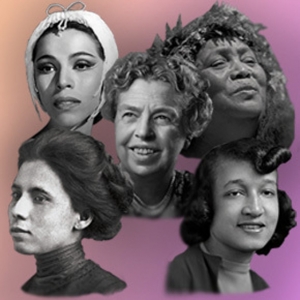
The legendary teacher of hula and University of Hawaiʻi instructor Edith Kanakaʻole, who died in 1979, is among the 2023 honorees for the American Women Quarters™ Program announced by the United States Mint.

An award-winning composer and former instructor at Hawaiʻi Community College and UH Hilo, Kanakaʻole will be one of five American women to be minted on new quarters next year, joining fellow honorees such as former first lady Eleanor Roosevelt and Maria Tallchief, America’s first Native American prima ballerina.

Five honorees
2023 American Women Quarters Program honorees: Eleanor Roosevelt (center), top from left, Maria Tallchief, Edith Edith Kanakaʻole; bottom from left, Jovita Idár, Bessie Coleman
This is the second iteration of a series the mint will be issuing with different reverse designs each year during a four-year span from 2022 through 2025.

The first batch of quarters featured Asian American acting legend Anna May Wong's image, the first AAPI to appear on U.S. currency. 

Others featured in the first issuance of commemorative quarters also included: Maya Angelou; astronaut Sally Ride; suffragist and politician Nina Otero-Warren; and Wilma Mankiller, the first female principal chief of the Cherokee Nation.

"The range of accomplishments and experiences of these extraordinary women speak to the contributions women have always made in the history of our country," said Mint Deputy Director Ventris Gibson in a statement issued in March during Women's History Month. "I am proud that the Mint continues to connect America through coins by honoring these pioneering women and their groundbreaking contributions to our society."

During her time at Hawaiʻi CC and UH Hilo, Kanakaʻole developed a variety of courses on ethnobotany, Polynesian history, genealogy and Hawaiian chant and mythology. 

Pualani Kanakaʻole Kanahele, a retired Hawaiʻi CC Hawaiian studies professor and daughter of the late Kanakaʻole, released this statement on the Edith Kanakaʻole Foundation website: 

“My mother was a ‘pusher’ but she always did it with a smile. She pushed all six of her children, when it was not yet a natural process for Hawaiians, toward higher education to earn a degree. When she became an instructor at the University of Hawaiʻi in Hilo, she encouraged Hawaiian students to 1) maintain their stay and earn their degree, 2) know who they were as Hawaiians and elevate the status of the Lāhui.”

In the late 1970s, Kanakaʻole recorded Hiʻipoi I Ka ʻĀina Aloha (Cherish the Beloved Land), which later captured a Nā Hōkū Hanohano award for Best Traditional Album of the Year. The album features mele (songs) that express her love for the land and includes compositions such as “Ka Uluwehi O Ke Kai” that celebrates the various limu of the sea, and is also a popular song performed by hula dancers of all ages.Kanakaʻole founded Hālau o Kekuhi, an internationally recognized dance company known for its ʻaihaʻa or low-postured, bombastic style of hula. 

In 1999, Kanahele helped launch I Ola Hāloa Center for Hawaiʻi Life Styles at Hawaiʻi CC. The program, which stresses the importance of Hawaiian cultural values and practices in higher education, is intertwined with teaching styles and lessons that stem directly from Kanakaʻole.

The other women who will be honored by having their image on the American quarter include:
  • Bessie Coleman – pilot, advocate, and pioneer who flew to great heights as the first African American and first Native American woman pilot, as well as the first African American to earn an international pilot’s license.
  • Jovita Idar – Mexican American journalist, activist, teacher, and suffragist. She devoted her life to fighting against separatist ideologies and sought to create a better future for Mexican Americans.
  • Eleanor Roosevelt – first lady, author, reformer, and leader. As chairperson of the Human Rights Commission where she oversaw the creation of the Universal Declaration of Human Rights, and as the first chair of the U.N. Commission on Human Rights, she advocated diligently for the civil liberties and needs of the poor, minorities, and the disadvantaged.
  • Maria Tallchief – America’s first prima ballerina, she broke barriers as a Native American ballerina who exhibited strength and resilience both on and off the stage.
EDITOR'S NOTE: Don't miss out on additional commentary, news and views from an AAPI perspective by following @DioknoEd on Twitter.

Tuesday, July 27, 2021

Tokyo Olympics: Hawaii's Carissa Moore catches a wave to a gold medal

SCREEN CAPTURE / NBC
Hawaii's Carissa Moore carried off the beach after winning surfing's first Olympic gold medal.

This is the first time surfing has been included as an event in the Olympics so it is fitting that surfing's first gold medal goes to a native of Hawaii, the birthplace of the sport.

The world's No. 1 ranked woman surfer Carissa Moore is the first woman to ever win a gold medal in her sport at the Olympics. The surfing team's lone ethnic Hawaiian, she not only represented the U.S., she represented Hawaii and its people.

"I feel super blessed, super fortunate. It's been an incredible experience," Moore said after beating South Africa's Bianca Buitendag in the final competition

"It's been a crazy couple of days, a little bit of a rollercoaster of emotions just trying to figure out the break, find my rhythm, learning how to trust myself without my family here." 

After Tropical Storm Nepartak bypassed the Olympic site overnight, a rainbow spanned the sky over Tsurgasaki Beach 40 miles from Tokyo. It may have been a sign from her the Rainbow State where her family stayed up late in Hawaii to cheer their hometown hero.

Buitendag had trouble catching the rough waves unable to perform her tricks but Moore caught wave after wave building an unsurmountable score.

Moore, the four-time World Surf League champion ,entered the tournament as the No. 1 seed. She has been surfing since she was seven.

"The ocean has changed my life and I can't imagine my life without it, I'll be surfing until I'm in the ground," Moore added. "Riding the wave makes you feel free, it makes you feel present, it makes you feel more in love with yourself and the ocean and the environment." has been surfing since she was seven. Now at 28, she has been the No. 1 woman surfer since she was 20.

This morning  (July 27), Moore was interviewed on the Today Show where she also called the victory a "huge moment" for her native Hawaii, where surfing is central to the culture.

"It's the best sport in the world," she told Today hosts Savannah Guthrie and Craig Melvin. "I'm biased, but it's just nice to share it with a whole other stage and with a whole bigger audience. Surfing, it just brings so much joy, and I hope that people can sense that when they watch."

Watch Carissa Moore win her gold medal:


Tuesday, July 6, 2021

RIP: Native Hawaiian educator and activist Haunani-Kay Trask

Monday, June 14, 2021

Dept. of Interior transfers federal land to Hawaiian land trust

Secretary of the Interior De Haaland

Eighty acres of federal property on the island of Oahu is being transferred to the Hawaiian Home Lands Trust that could provide homestead property for 200 to 400 Native Hawaiian families.

As action is part of the President Biden's administration’s commitment to honor relationships with Indigenous communities and uphold trust responsibilities, according to an announcement by Biden's Interior Secretary Deb Haaland and Deputy Secretary of Commerce Don Graves.

“The Native Hawaiian Community has waited more than 20 years for the federal government to address a $16.9 million credit owed by the United States to the Hawaiian Home Lands Trust,” said Secretary Haaland., the first Native American to head the Department of Interior.

“Today’s action is an important step in our commitment to resolving the Hawaiian Home Lands Recovery Act settlement. We thank the Department of Commerce, General Services Administration, State of Hawai‘i, and Native Hawaiian Community members who provided their input during consultation on this transfer.”

The surplus federal property is located at the former NOAA Pacific Tsunami Warning Center on O‘ahu.

The lands are being transferred to the state of Hawaii’s Department of Hawaiian Home Lands for inclusion in the Hawaiian Home Lands Trust. The transfer will help fulfill the terms of a settlement agreement authorized by Congress in 1995 to compensate Native Hawaiians for the lost use of 1,500 acres of lands set aside as potential homelands but subsequently acquired and used by the U.S. Government for other purposes. 

The federal government owns and manages about 20% of the land in Hawaii, most of the land is reserved for recreational or military uses and only a small portion of the lands is developable.

“Residential lots on Oʻahu are of the highest demand from applicants on the waiting list. This land transfer is an opportunity for beneficiaries that is truly in line with the spirit of the Hawaiian Home Lands Recovery Act,” said William J. Aila, Jr., Chairman of the Hawaiian Homes Commission.

In 1998, the Interior Department and the state of Hawai‘i identified a site for transfer under the HHLRA. In 2000, that site became unavailable, leaving a credit of $16.9 million owed to the Trust by the United States.

The General Services Administration notified the state of Hawai‘i of the availability of NOAA’s Pacific Tsunami Warning Center site in 2020. The former Pacific Tsunami Warning Center land represents the best available property offered to the Hawaiian Home Lands Trust by the United States, suitable for residential development, under the HHLRA. 

After an appraisal, environmental review, and consultation with the Native Hawaiian Community, the Interior Department notified the General Services Administration that the site is suitable and approved the conveyance to the Hawaiian Home Lands Trust to satisfy $10 million of the $16.9 million credit.

The state's Department of Hawaiian Home Lands, a state agency charged with facilitating the return of lands seized from Native Hawaiians in 1893 by a U.S.-backed group of sugar and pineapple plantation owners. The businessmen and their U.S. military co-conspirators deposed Queen Liliuokalani and lobbied the president for U.S. annexation of Hawaii, which occurred. In 1898, when the U.S. annexed the island chain, it took possession of 1.8 million uncompensated acres of former kingdom land.

Thousands of low-income Native Hawaiians, unable to afford property at the market rate, are on wait lists for homesteads as promised. A 2020 investigation by the Star Advertiser and Pro-Publica revealed that some of the federal lands had been sold by the U.S. Navy to private parties for development, bypassing the land trust. 

The so-called "workarounds" were approved by lawmakers, including the late Senators Daniel Inouye and Daniel Akaka and current Senators Mazie Hirono and Brian Schatz. Hirono and Schatz claim they were unaware of the workarounds but the practice must stop going forward.

On paper, the 203,000-acres in the land trust contains 7,800 acres on the Oahu, the most populated island in the Hawaii chain. However, much of the land is "defined by two large mountain ranges that create towering ridges, steep slopes, forests, beaches and sea cliffs. But in reality, just a fifth of that land is considered suitable for residential development. A full third of DHHL’s Oahu holdings are on terrain so rugged that it has been marked purely for conservation, including 1,400 acres of steep mountainside in the Hawaiian community of Waimanalo," writes the investigative articles.


“We are pleased that Native Hawaiians will now have access to the 80 acres in Ewa Beach where the NOAA Pacific Tsunami Warning Center once resided,” said Deputy Secretary Don Graves. “With this overdue transfer, this parcel of land will soon be called home for hundreds of Native Hawaiians."

The long-delayed action by the Interior Department holds the promise that it could be the first of such land transfers under the Biden administration, which couldn't come soon enough.

"About 11,000 Hawaiians are now seeking residential homesteads on Oahu," according to the report by Pro Publica and the Star Advertiser "The trust has only enough land to accommodate less than a third of those homestead-seekers in single-family homes, although it is moving to develop more multi-family housing. Many waitlisters are homeless, and thousands have died without getting a homestead lease."


Friday, May 28, 2021

Hate and pandemic added to reestablished White House Initiative on AANHPI

Native Hawaiian Krystal Ka'ai will serve as executive director of the White House Initiative on
Asian Americans, Native Hawaiians and Pacific Islanders.

President Joe Biden signed an Executive Order Friday reestablishing the White House Initiative on Asian Americans, Native Hawaiians, and Pacific Islanders, reinvigorating the body by expanding its responsibilities, including coordinating a "comprehensive" federal response to the rise in anti-Asian violence and discrimination.

"... For far too long, systemic barriers to equity, justice, and opportunity have put the American dream out of reach for many AA and NHPI communities, and racism, nativism, and xenophobia against AA and NHPI communities continues to threaten safety and dignity of AA and NHPI families," stated a White House fact sheet.

Long-time Capitol veteran Krystal Ka’ai, a Native Hawaiian and executive director of the Congressional Asian Pacific American Caucus, will serve as the executive director for the initiative, which will include representatives from across the executive branch.

The AANHPI communities make up the fastest growing ethnic group in the United States and make invaluable contributions to America's society, economy, and culture states the White House. 

"Yet for far too long, systemic barriers to equity, justice, and opportunity have put the American dream out of reach for many AA and NHPI communities, and racism, nativism, and xenophobia against AA and NHPI communities continues to threaten safety and dignity of AA and NHPI families," continues the order.

The Commission will advise the President on ways the public, private and nonprofit sectors can work together to advance equity and opportunity for every AA and NHPI community. 

The Commission is also charged with advising the President on policies to address anti-Asian xenophobia and violence, ways to build capacity in AA and NHPI communities through federal grantmaking, and policies to address the intersectional barriers that AA and NHPI women, LGBTQ+ people, and people with disabilities face. 

The Commission will include AA and NHPI civic leaders from across the country, and will reflect the rich diversity of AA and NHPI communities throughout the United States.

The new Initiative is charged with driving an ambitious, whole-of-government agenda to advance equity, justice, and opportunity for AA and NHPI communities by:
  • Helping to coordinate a comprehensive Federal response to the rise in acts of anti-Asian bias and violence
  • Addressing the systemic lack of disaggregated data on AA and NHPI communities in Federal statistical systems
  • Expanding language access and language assistance programs for AA and NHPI individuals across federal programs
  • Strengthening economic security and opportunity for AA and NHPI communities by empowering AA and NHPI entrepreneurs, building new workforce training opportunities, and promoting workplaces that are free from harassment against AA and NHPI workers
  • Addressing the concentration of poverty experienced in many AA and NHPI communities
  • Addressing disparities in educational outcomes for AA and NHPI students of all ages, and addressing bullying, harassment, and discrimination in our Nation’s schools
  • Advancing climate and environmental justice for AA and NHPI communities who are particularly impacted by the climate crisis and are overburdened by environmental degradation
  • Promoting inclusion and belonging for all AA and NHPI communities by strengthening public awareness and education about AA and NHPI communities, cultures, and traditions
  • Empowering AA and NHPI communities to be civically engaged, including through electoral participation
  • Building a Federal workforce where AA and NHPI public servants are leaders at the most senior levels of our government
  • Ensuring that AA and NHPI communities are empowered and equitably served by Federal funding, grants, and contract
“Data disaggregation is a racial and health equity issue. Disaggregating data plays a critical role in better understanding how Asian American and Native Hawaiian and Pacific Islander communities are adversely impacted by health, economic and social inequities." said Rod Lew, MPH, Executive Director of Asian Pacific Partners for Empowerment, Advocacy, and Leadership (APPEAL)

At a time where anti-Asian hate is surging, the AANHPI communities are also a pandemic that has disproportionately hit these communities revealing the significant health inequities faced by many Native Hawaiians and Pacific Islanders in particular. To ensure that the Federal government is mitigating COVID-19 related anti-Asian bias, advancing health equity for all AA and NHPI communities, and ensuring AA and NHPI communities can equitably recover from these crises, the Initiative will be led out of the Department of Health and Human Services.

Ka'ai's appointment has greeted with praise.

“The appointment of Krystal Kaʻai serves as a beacon of hope and provides a sense of place for Native Hawaiians and Pacific Islanders in the United States. We are excited and eager to work with Krystal and the Biden Administration to address the important needs of our community” said Kūhiō Lewis, President and CEO for the Council for Native Hawaiian Advancement.

Ka'ai has served as the Executive Director of the Congressional Asian Pacific American Caucus (CAPAC) since 2013, leading legislative, communications, and outreach strategy for a bicameral caucus composed of more than 70 members in both the U.S. House of Representatives and U.S. Senate. 

She worked to advanced key priorities impacting the AAPI community, including health care, immigration, education, civil rights, economic development, and more. She previously served in various roles with the U.S. Senate Committee on Indian Affairs and the State of Hawai‘i.

Juliet K. Choi, President and CEO of the Asian & Pacific Islander American Health Forum, said: "We’re especially pleased that the Initiative will be led out of the Department of Health and Human Services, as our AA and NHPI communities have faced, and continue to face, long standing disparate health outcomes that have been magnified by the COVID-19 pandemic and exacerbated by xenophobia and anti-Asian hat."

Wednesday, May 5, 2021

Merrie Monarch Festival will be held this summer

The Merrie Monarch hula competition draws schools from all over the islands.

After being canceled last year because of the coronavirus, the Merrie Monarch Festival has developed safety guidelines and virtual format so that the hula competition can be held this summer.

The ultimate hula competition has been held annuallly since 1964, except for 2020. Hula schools and individual dancers from all over the islands compete in the festival meant to preserve the Native Hawaiian culture.

“The health and wellbeing of all hālau participants and the community overall was our top priority then and continues to be now as we move forward with holding the event this year,” said Kawelu who worked with health professionals and a team of advisors to develop safety guidelines modeled after those used by professional sports teams and associations over the past year. 

“We are grateful to our partners, including representatives from The Queen’s Health Systems, that are lending their time, expertise and resources to help us set up and implement this comprehensive safety plan,” Kawelu continued.

The 2019 Miss Aloha Kahiko title was won by Taizha Keakealani Hughes-Kaluhiokalani.


All hālau participants, festival staff, as well as the television production crew have agreed to follow the guidelines that include undergoing multiple COVID testings, a 5-day isolation period prior to entering the competition venue for the first time, and daily screenings to continually monitor participants for symptoms. 

Kumu Hula Keʻano Kaʻupu of Hālau Hiʻiakaināmakalehua shared that, “it was a lot to consider given that competition preparation is intense in and of itself. But hula isn’t just an activity we do, it is our way of life and we really wanted to be back in this Merrie Monarch space and community.” 

Fellow Kumu, Lono Padilla, added that “the level of detail and analysis that went into the guidelines and protocols reassured us that this was something we could do safely.”

County of Hawaiʻi Mayor Mitch Roth affirmed the County’s support of the festival saying, “as a dedicated and crucial partner, the County of Hawai‘i continues to work closely with Merrie Monarch Festival President Luana Kawelu, and the Organizing Committee.” Roth specifically acknowledged the plan saying, “I have received, read and approved the comprehensive and robust outline of the extensive protocols and actions.” 

Men dancers compete in the Merrie Monarch Festival.

As announced in November 2020, there will be no live audience but there will be a three-night television broadcast of the competition on Hawaiʻi News Now’s KFVE. 

Performances will take place and be judged in Hilo at the Edith Kanakaʻole Stadium on June 24, 25, and 26 and then be broadcasted on KFVE the following week on July 1, 2 and 3 at which time the winners will be announced. 

There are a total of 15 hālau participating (listed below) that will present 11 Wahine and eight Kāne performances in both the Kahiko and ʻAuana categories as well as seven Miss Aloha Hula entrants.

Following is a list of the participating Hālau:
-Hālau Hi‘iakaināmakalehua
-Hālau Hula ‘O Nāpunaheleonāpua
-Hālau Hula Ke ‘Olu Makani O Mauna Loa
-Hālau Hula Olana
-Hālau I Ka Wēkiu
-Hālau Ka Lei Mokihana o Leinā‘ala
-Hālau Ka Liko Pua O Kalaniākea
-Hālau Kala‘akeakauikawēkiu
Hālau Kekuaokalāʻauʻalaʻiliahi
-Hālau Keolakapuokalani
-Hālau O Ka Hanu Lehua
-Ka Lā ‘Ōnohi Mai O Ha‘eha‘e
-Kawai‘ulaokalā
-Kawaili‘ulā
-Ke Kai O Kahiki