Showing posts with label Health. Show all posts

Thursday, April 13, 2023

Filipino Americans have the hardest time falling asleep


Maybe it's the guilt melded into Filipinos' by a strict religious upbringing, the anxiety caused by  an unpaid debt (utang na loob) or the burden of shame (hiya), but whatever the reason, a
 new study has found that among Asians, Filipinos have the hardest time falling asleep.

A study,  "Sleep disparities in Asian Americans: a comprehensive review" by the National Institute of Health indicated there were variations in sleep outcomes among individuals of Asian descent and living in the US.

“We found the highest burden of insufficient sleep among Filipinos and better sleep quality outcomes among Asian Indians compared to [non-Hispanic Whites.] By disaggregating NHS (Asian American) data, we identified significant differences in sleep outcomes among different (Asian American) populations.," say the study's authors.

The survey by the National Institute of Health among different Asian American groups looked at sleep duration, sleep quality, trouble falling asleep, trouble staying asleep, and sleep medication usage.

"This demonstrates the utility of disaggregating Asian American health outcomes in analyzing survey data to effectively focus public health efforts,” concluded the study authors.


Among participants in the Filipino group, the greatest predictors for insufficient sleep included severe psychological distress especially among those who were born outside of the US and those who have fair or poor health.

In contrast, among Asian Indians, the soundest sleepers, the greatest predictors for sufficient sleep included being a former smoker and being foreign-born and living in the US for less tthan 10 years.

Of participants in the White study group, 61.8% reported they had no trouble falling asleep, whereas 76.7% of those in the Asian Indian, 73.3% of those in the Chinese, and 71% in the other Asians groups reported they had no trouble falling asleep. Participants in the Filipino group reported similar rates (62.3%) as those in the White group.

Most aggregated studies find Asian American adults experiencing lower sleep duration and poorer sleep quality compared to non-Hispanic White Americans and comparable or slightly higher sleep duration compared to Black Americans.

Some of the findings include:
  • First-generation immigrants report better sleep quality than subsequent generations.
  • East Asian Americans may experience better sleep outcomes compared to Southeast Asian Americans.
  • Obstructive sleep apnea is critically underreported in South Asian Americans.
Sleep disparities between Asian Americans and other racial groups are impacted by perceived discrimination, poor mental health, and cultural attitudes toward sleep. The observed within-group disparities of Asian American sleep may be attributed to socioeconomic status and generational status/acculturation.


While the study found the differences in sleep among Asian Americans, it did not delve into the cultural or societal causes for sleep differentials. The study's authors concluded that much more research is required in Asian American sleep disparities, specifically in South and Southeast Asian Americans.

Existing barriers to research include the model minority myth and lack of disaggregated racial sleep data.

EDITOR'S NOTE: For additional commentary, news and views from an AANHPI perspective, follow @DioknoEd on Twitter.


Tuesday, March 28, 2023

Hepatitis B: The virus that silently haunts Asian Americans


There is a virus that may affect immigrants born in Asia that can be undiscovered for years - even decades - until a cancer develops in the liver. By then, it can be fatal.

Asian Americans make up 6% of the total population in the United States, but account for 58% of the 862,000 Americans living with chronic Hepatitis B. Prevalence is also high among Pacific Islanders living in the United States. 

If discovered early, it can be treated but because of cultural and institutional barriers, AANHPI often don't discover the virus until later in life. 

Therein is the problem. A person can have Hepatitis B and not show any symptoms, except, perhaps, a general tiredness. Many people who don't know they have Hepatitis B often just learn to accept and  consider that condition as "normal." 

How is Hepatitis B spread? 

Hepatitis B is spread when someone comes in contact with blood from a person who has the disease. Most people born in Asian countries who have Hepatitis B were infected as infants or young children. Hepatitis B can be passed from an infected mother to her baby at birth or from a family member to young children. 

Considering that 70% of the AANHPI are first-generation immigrants, according to the US Census, and that they can inadvertently spread the virus to the next generation born in the US, it is may affect a good portion of the AANHPI population

It is important to know that Hepatitis B is not a genetic disease. People also do not get Hepatitis B from sharing meals, bowls or utensils with someone who has the disease. Hepatitis B is not spread through breastfeeding, hugging, kissing, holding hands, coughing, or sneezing. 


The following is from the Centers for Disease Control and Prevention:


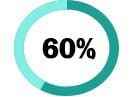
50%26#37;

Hepatitis B disproportionately affects Asian Americans

Hepatitis B is common worldwide, especially in many parts of Asia and the Pacific Islands. In the United States, hepatitis B disproportionately affects Asian Americans. While Asian Americans make up 6% of the US population, they account for more than 60% of Americans living with hepatitis B.


Icon for RX

Hepatitis B is serious, but treatments are available

Left untreated, nearly 1 in 4 people living with hepatitis B develop serious liver problems, even liver cancer. In fact, hepatitis B-related liver cancer is a leading cause of cancer deaths among Asian Americans. Getting tested for hepatitis B can help many people access lifesaving treatments that can prevent serious liver damage.


Icon for two in three

2 in 3 Asian Americans with Hepatitis B don’t know they are infected

People can live with hepatitis B for decades without having any symptoms or feeling sick. hepatitis B is usually spread when someone comes into contact with blood from someone who has the virus, and many people living with hepatitis B got infected as infants or young children. Testing is the only way to know if someone has hepatitis B.


Icon for checkmark

Who should get tested for Hepatitis B?

  • Anyone born regions of the world where hepatitis B is common, including Asia, the Pacific Islands and Africa
  • Anyone born in the United States, who was not vaccinated at birth, and has at least one parent born in regions of the world with high rate of hepatitis B, including East or Southeast Asia the Pacific Islands (except New Zealand and Australia) and Sub-Saharan Africa
  • Hepatitis B testing identifies people living with hepatitis B so they can get medical care to help prevent serious liver damage. Talk to a doctor about getting tested for Hepatitis B.


What should be done when a family member has Hepatitis B? 

Doctors will want to test all family members of people with Hepatitis B. This includes adults and children living in the same house. The test involves a simple blood test that takes only a small amount of blood from a person’s arm. Testing family members is important. Family members who have Hepatitis B should get medical treatment. Other family members who do not have the disease should get the Hepatitis B vaccine. This protects them from getting the disease. 

Hepatitis B test results will be kept confidential. People with Hepatitis B cannot be forced to leave the United States. They also cannot be fired from a job, or forced to leave school. 

CDC has developed resources, such as fact sheets and community mobilization toolkits, to help educate people born in these countries about the importance of hepatitis B testing.

EDITOR'S NOTE: For additional commentary, news and views from an AANHPI perspective, follow @DioknoEd on Twitter.


Thursday, March 21, 2019

How healthy is boba tea?


ASAM NEWS


Walk past many boba tea shops in the San Francisco Bay Area and its common to see a line out the door. The drink is especially popular among young Asian Americans.
While green tea is considered a healthy drink filled with anti-oxidants and anti-inflammatory components, reports indicate that boba or bubble tea may be a different story, according to the Insider.

Bubble tea contains about 300-400 calories due to all the added sugar and syrups added for flavoring, not to mention the tapioca pearls. Boba also lacks any minerals, vitamins or fiber. In fact, calling it “tea” may be a misnomer.

“Bubble tea, however is not just tea … It’s like sugar disguised as tea,” said Bonnie Taub-Dix, a registered dietician to the Insider.


Reader's Digest explained how the bubbles are round pieces of tapioca, called "tapioca pearls," which are made from starch extracted from cassava root, a nutty-flavoured vegetable grown in South America.


Although this could be mistaken for being healthy, the pearls are boiled, before sugar and honey is added for flavor, and thus the "bubbles" alone could have 160 calories per quarter cup serving.

“One of the most popular bubble tea shops generally serves their drinks in 500-ml cups, and they will have 10 or more teaspoons of sugar in them. A 600-ml Coke has about 15 teaspoons of sugar in it, so it’s pretty on par with soft drink.” dietitian Milly Smith said to the Honey Coach.

Both Smith and Taub-Dix agree, traditional green tea is the best choice for tea drinkers.
____________________________________________________________________________